Coffee is more than the drink in your guest’s cup. It’s the story that sells.
For a restaurant owner or coffee shop manager, choosing beans is the foundation of their business. But behind every great blend lies more than just a successful combination of Arabica and Robusta beans, but also fateful historical events. Today, we’ll tell you a story that connects Vienna and Venice, the Ottoman Empire and the Alps, and explains why the acquisition of a small roasting factory in Bolzano became a turning point in the history of coffee giant Julius. Meinl .
This is the story of how Viennese aristocracy met Italian temperament to give the world Caffè del Moro.
From Venice to Vienna: How the Turks Gave Europe Coffee
To understand the grandeur of this alliance, we must go back 300 years. The history of coffee in Europe is the history of two great gateways: Venice in the south and Vienna in the north. And in both cases, the keys to these gates were held by the Turks of the Ottoman Empire.
The Venetian Route: Trade
In the 17th century, Venetian merchants, the leading traders of the Mediterranean, were the first to bring sacks of the mysterious “black gold” to Italy from the ports of the Ottoman Empire. Italians fell in love with this drink instantly. Thus was born the culture of espresso—a quick, dark, rich shot of energy. The symbol of this era became the “Mori” —Moors , Turks, and black merchants, whose images became entrenched in the heraldry and trade marks of the Venetian Republic.
The Vienna Route: War and Legend
In 1683, Vienna was besieged by a massive Ottoman army. It seemed the city would fall. But thanks to heroism and resourcefulness (including that of the legendary Yuri Franz Kulchitsky), the siege was lifted. Retreating, the Turks abandoned their supply trains. Among the gold and weapons, the Viennese found sacks of green beans. Thus, the first coffeehouses opened in Vienna. But here, coffee was drunk differently: leisurely, with milk, while reading a newspaper. Thus, Viennese coffee culture was born.
The irony of history:Both Vienna and Italy received coffee from the same source—Turkish. But they created two completely different philosophies from it.
Mirror Image: Julius Meinl and Caffe del Moro
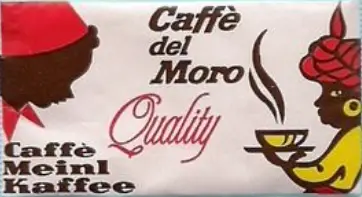
Centuries passed. The Julius Empire flourished in Vienna. Meinl, founded in 1862. Their logo is the famous Meinl Mohr ( Meinl Mohr ,a boy in a fez. This is a tribute to the very Turks who brought coffee to the walls of Vienna.
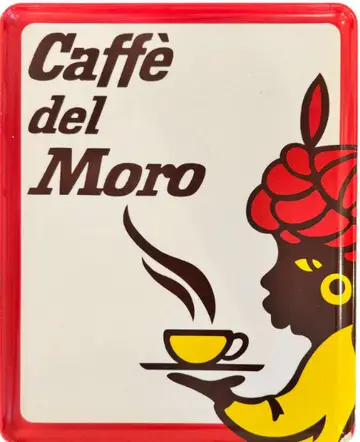
And in the north of Italy, in the city of Bolzano, there was another company – Caffè del Moro. And, surprisingly, their logo was also a Moor’s head (” Moro ” in Italian means “Moor”, “dark-skinned”).
Two companies. Two empires.
- At Julius’s Meinl is a boy in a fez.
- At Caffè del Moro – profile of a Moor.
It wasn’t just a coincidence. It was a sign of kinship. Both brands honored the historical roots of coffee’s origins. When Julius’ management Meinl turned its attention to the roasters from Bolzano, who saw in them their Italian reflection.
Bolzano: Bridge between worlds
Why Bolzano ? Geography is destiny.
Bolzano is located in South Tyrol. Historically, these lands belonged to the Austro-Hungarian Empire for centuries. This is a territory where Austrian meticulousness blends with Italian ” dolce” Vita . They speak two languages here. They understand both Viennese mélange and ristretto.
For Julius Meinl’s acquisition of the Bolzano plant was more than just a business deal. It was a homecoming. Purchasing a facility on land that was once part of their native empire was a symbolic act of reuniting Austrian and Italian coffee traditions.
The Secret of Caffe del Moro : Who are they and why did they sell the legend?
the Caffèdeal del Morowasn’t just a local brand. It was a cult name among connoisseurs in northern Italy.
Authors and owners
Owners of Caffe del Moro was a family of hereditary Tyrolean roasters. They were “old school” artisans for whom the sound of cracking beans in the roaster was more important than financial reports. They created a blend that perfectly balanced the balance: it was light enough for Italians, yet incredibly aromatic and complex, a quality prized in Austria.
Why did the owners sell the business?
It’s a classic story of a successful artisan. Their product became so successful that the small family-run business in Bolzano could no longer meet demand. The owners were faced with a choice:
- Remain a small local manufacturer and refuse thousands of customers.
- Pass your brainchild into the hands of those who can scale its success without killing the soul of the product.
They chose an Austrian company. Not because they offered more money, but because they saw the same respect for history in the Austrians. They knew: Julius Meinl won’t turn their art into a soulless assembly line. The family passed on the recipes and technology, entrusting the “Mavr” to the “Boy in the Fez.”
What is the name of the legend today?
You’re probably asking, “Where is this blend now? How do I serve it to my guests?“
After acquiring the Julius plant Meinl did not erase the Caffe name del Moro . On the contrary, they made this brand the crown jewel of their professional restaurant collection.
Today, this historic blend continues to live under its proud name:
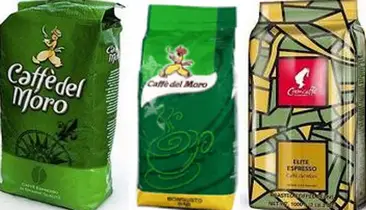
Caffè del Moro Elite Espresso
In the HoReCa line it is often presented as Elite Espressoor Caffè del Moro Bar.
What is the essence of this blend?
This is the quintessence of “Italian taste” as Julius understands it. Meinl .
- Roast:Medium-Dark, not quite the traditional Italian (compared to the lighter Viennese).
- Taste:Rich, with notes of dark chocolate, peanuts, caramel and spice.
- Aroma:Vibrant cocoa, caamel, and jasmine flowers. It’s beyond comprehension how this was possible.
- The idea:This is the same coffee you drink in a bar in Rome or Florence, but produced with Austrian quality control.
It was in the plant in Bolzano (and later in Vicenza ), using Caffe technology del Moro , Julius Meinl has mastered the art of making that perfect espresso that today allows them to dominate not only Viennese coffee houses, but also the world’s best restaurants.
What does this mean for your business?
Dear partners, when you load Elite grain By pouringespressointo a coffee machine, you’re not just making a drink. You’re selling your guests the history of two great cultures.
The Julius Merger Story Meinl and Caffe del Moro teaches us an important lesson: Success comes when tradition unites for quality.
Buying Elite Espresso , Julius Meinl didn’t buy walls and machines. They acquired an Italian soulfor their Austrian body. Now that soul can live in your establishment.
Serve your guests a cupof DelMoroEliteEspresso and tell them this story.Tell them about the Turks near Vienna, the merchants of Venice, the craftsmen of Bolzano, and the two logos that looked at each other through the centuries to eventually become one.
Guests come for the food, but they return for the experiences and stories. With Julius Meinl you always have a story worthy of an emperor.
Do you want the legendary taste of Caffe? del MoroElite Didespresso and impeccable quality contribute to the success of your restaurant?
Contact the official Julius representative Meinl in Uzbekistan. Let’s create a high-quality coffee culture together. Fill out the contact form below.
Julius Meinl . More than a moment.